
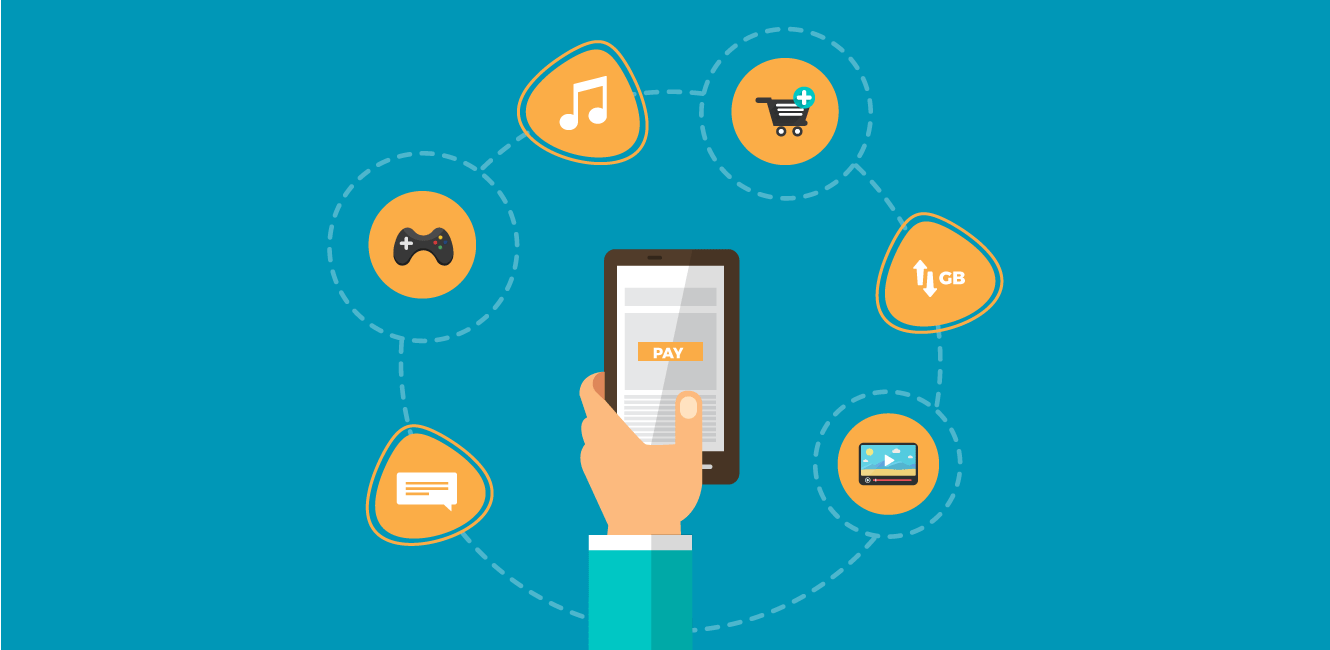
In today’s fast-paced digital world, mobile payments are becoming an essential part of everyday transactions. Among the many innovations in this space, Direct Carrier Billing (DCB) stands out as a revolutionary solution, simplifying payments and providing new opportunities for consumers and businesses alike. By enabling users to charge purchases directly to their mobile phone bill, DCB eliminates traditional payment barriers, streamlines the process, and opens doors to a broader audience. This approach has significantly influenced global mobile commerce trends and has even impacted niche financial services, such as 소액결제현금화.
The Rise of Mobile Payments
The adoption of smartphones worldwide has dramatically increased the demand for convenient payment methods. Consumers now expect instant transactions without the need for cash, credit cards, or complicated online payment systems. Mobile wallets and payment apps have transformed how we pay for goods and services, from digital subscriptions to in-app purchases. However, many consumers, especially in regions where credit card penetration is low, still face challenges accessing these services. Direct Carrier Billing offers a solution by leveraging mobile networks as a trusted intermediary.
Unlike traditional online payment methods that require users to enter sensitive financial information, DCB simplifies the process by allowing charges to appear directly on a mobile phone bill. This makes transactions faster, more secure, and more accessible to those without bank accounts or credit cards. It’s no surprise that mobile carriers have become central players in the evolution of digital commerce.
How Direct Carrier Billing Works
Direct Carrier Billing works by integrating mobile network operators into the payment process. When a user opts to pay via DCB, the purchase amount is added to their monthly phone bill or deducted from prepaid balances. The mobile carrier collects the payment on behalf of the merchant, ensuring a seamless and secure transaction.
This model benefits both consumers and businesses. For consumers, it removes the need to carry cards, remember passwords, or input banking details, making purchases quick and frictionless. For businesses, it expands the potential customer base, especially among younger users or those in emerging markets who may not have access to traditional financial instruments.
Moreover, DCB provides an added layer of security. Since transactions are authorized through the mobile network, there is minimal exposure to fraud compared to traditional credit card payments. The user’s identity is verified by the carrier, reducing the risk of unauthorized purchases and providing peace of mind for both buyers and merchants.
Direct Carrier Billing and Microtransactions
One of the most transformative aspects of Direct Carrier Billing is its impact on microtransactions. Small payments for digital content, such as game credits, music downloads, or streaming subscriptions, often face hurdles when using conventional payment methods due to transaction fees or complicated processes. DCB removes these obstacles, making small payments effortless and convenient.
In countries like South Korea, where 소액결제현금화 (small payment cash conversion) has become increasingly popular, Direct Carrier Billing plays a crucial role. Users can pay for services or content with minimal effort and even convert small transaction balances into usable cash when regulations and platforms allow. This flexibility enhances consumer engagement, promotes frequent purchases, and drives the digital economy forward.
Expanding Access to Digital Services
The accessibility offered by Direct Carrier Billing is particularly impactful in regions with limited banking infrastructure. Many consumers in developing markets cannot access credit cards or online banking, which traditionally limits participation in digital commerce. By allowing mobile carriers to handle payments, DCB brings digital services within reach for millions of people.
For example, purchasing in-game items, subscribing to premium content, or paying for digital learning platforms becomes straightforward. Users simply authorize the transaction through their phone, and the carrier handles the rest. This simplicity not only boosts adoption rates but also encourages the growth of digital ecosystems where previously financial barriers existed.
Business Advantages of Direct Carrier Billing
From a business perspective, Direct Carrier Billing offers several advantages. By integrating DCB into their payment options, companies can increase conversion rates, particularly for mobile-first customers. Consumers are more likely to complete transactions when payment is simple, secure, and immediate.
Additionally, DCB allows businesses to tap into a younger demographic that may not have access to traditional payment methods. Mobile carriers, having established trust with their users, act as intermediaries that reduce friction and enhance customer confidence. Furthermore, the reporting and analytics provided by DCB platforms enable businesses to understand purchasing patterns, tailor offerings, and optimize pricing strategies.
Security and Compliance
Security is a significant concern in digital payments, and Direct Carrier Billing addresses this effectively. Since transactions are authenticated by mobile carriers, users benefit from robust verification processes. Carriers often employ multiple layers of authentication, ensuring that fraudulent activities are minimized.
Compliance with local regulations is another important aspect. Countries often have specific laws governing mobile payments, consumer protection, and privacy. DCB providers work closely with regulators to ensure that all transactions adhere to legal frameworks, offering additional security and trust to both consumers and merchants.
The Future of Mobile Payments with DCB
Direct Carrier Billing is poised to play an even more prominent role in the evolution of mobile payments. With the growth of digital content, in-app purchases, and subscription-based services, the demand for convenient and secure payment methods will continue to rise.
The integration of DCB with emerging technologies like digital wallets, QR codes, and blockchain could further enhance its utility, offering even faster and more versatile payment options. Additionally, as global mobile penetration continues to expand, Direct Carrier Billing will increasingly serve as a bridge between traditional financial systems and digital commerce, making services accessible to a broader population.
The role of 소액결제현금화 in this ecosystem will also evolve. As regulatory frameworks and financial platforms mature, consumers may find even more ways to leverage small mobile payments, enhancing their purchasing power and increasing engagement with digital platforms.
Conclusion
Direct Carrier Billing has transformed mobile payments by simplifying transactions, enhancing security, and expanding access to digital services. Its impact on microtransactions and services like 소액결제현금화 highlights its relevance in modern financial ecosystems. By allowing consumers to charge purchases directly to their mobile phone bills, DCB removes traditional barriers, encourages frequent usage, and promotes digital economic growth.
For businesses, it offers higher conversion rates, better customer engagement, and valuable insights into consumer behavior. For consumers, it provides convenience, security, and accessibility that traditional payment methods often cannot match. As mobile technology continues to evolve, Direct Carrier Billing will remain a cornerstone of digital payments, driving innovation and inclusivity in the mobile economy.
